Easy Spicy Tuna Kimbap Quick Recipe
Easy 15-min. Spicy Tuna Kimbap is your new weeknight savior, and trust me, you’re going to fall in love with it. Forget complicated culinary endeavors; this vibrant Korean rice roll delivers an explosion of flavor and satisfying textures without demanding hours in the kitchen. What makes kimbap, in general, so universally adored? It’s that perfect balance of savory rice, fresh vegetables, and delicious fillings, all wrapped up in a neat, portable package. But our Easy 15-min. Spicy Tuna Kimbap takes it up a notch with a zesty kick that awakens the palate. The simplicity of the preparation, combined with the irresistible spicy tuna, makes this dish incredibly special. It’s the ideal solution for a quick lunch, a light dinner, or even a crowd-pleasing appetizer that everyone will be asking for the recipe for.
Get ready to assemble your own delicious Easy 15-min. Spicy Tuna Kimbap in no time!
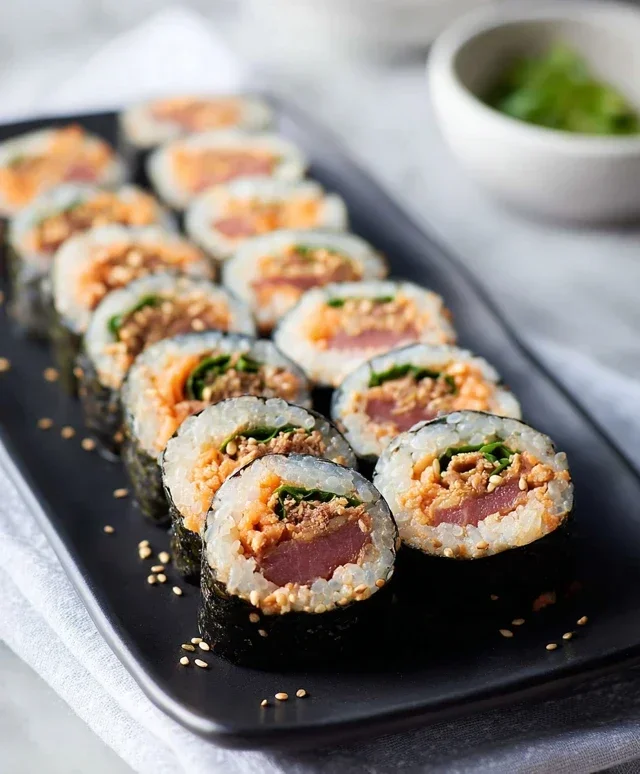
Easy 15-min. Spicy Tuna Kimbap
Looking for a quick, flavorful, and satisfying meal or snack? My Easy 15-minute Spicy Tuna Kimbap is your answer! This recipe is a lifesaver on busy weeknights when you need something delicious without spending hours in the kitchen. Kimbap, often referred to as Korean sushi rolls, is traditionally filled with a variety of ingredients. My spicy tuna version takes a classic flavor profile and gives it a delightful kick that’s incredibly addictive. The best part? It comes together in a flash, making it perfect for lunchboxes, a light dinner, or even an impressive appetizer for unexpected guests. Let’s dive into how we can create these amazing rolls with minimal fuss!
The beauty of kimbap lies in its versatility and simplicity. While traditional kimbap can involve a multitude of cooked vegetables and marinated meats, this streamlined version focuses on bold, punchy flavors that require very little prep. The spicy tuna filling is incredibly easy to whip up, and the other components are either ready-to-go or require minimal effort.
Ingredients:
Instructions:
Step 1: Prepare the Rice
The foundation of any good kimbap is perfectly seasoned rice. For this recipe, I recommend using short-grain rice, as its slightly sticky texture is ideal for rolling. If you have leftover rice from another meal, that’s fantastic! Just make sure it’s heated through before you begin extract. In a medium bowl, combine your 2 cups of hot cooked short-grain rice with 1 teaspoon of sesame oil, 1 teaspoon of sesame seeds, and 1 teaspoon of salt. Gently mix everything together using a spatula or spoon, being careful not to mash the rice grains. You want to evenly distribute the seasonings throughout the rice. The warmth of the rice will help the sesame oil meld beautifully. This seasoned rice will provide a subtle nutty flavor and a hint of saltiness that complements the spicy tuna filling perfectly.
Step 2: Create the Spicy Tuna Filling
This is where the magic happens! Open your can of tuna and drain off any excess oil or water. For the best flavor and texture, I prefer tuna packed in oil, but tuna in water works just as well. In a small bowl, flake the drained tuna with a fork. Add the 2 tablespoons of very finely chopped green onion. Green onions add a fresh, sharp contrast to the richness of the tuna and mayo. Next, add 2 tablespoons of Japanese mayonnaise. Kewpie mayo is known for its creamy texture and rich, umami flavor due to the use of egg yolks and rice vinegar, but regular mayonnaise will also work perfectly if that’s what you have on hand. Finally, stir in 1 to 2 tablespoons of sriracha. Start with 1 tablespoon and taste the mixture, then add more if you desire a spicier kick. If you don’t have sriracha, gochujang (Korean chili paste) is an excellent alternative and will lend a more authentic Korean flavor. Mix everything thoroughly until well combined and creamy. You want a consistent mixture that’s easy to spread.
Step 3: Assemble the Kimbap Base
Now it’s time to assemble your rolls! Lay one sheet of nori shiny-side down on a clean, dry surface. If your nori sheets have a rough side and a shiny side, always place the filling on the rough side. Next, arrange the perilla leaves on top of the nori. I like to overlap them slightly to create a cohesive layer. If you’re using green leaf lettuce as a substitute, ensure the leaves are dry to prevent the nori from becoming soggy. The perilla leaves add a subtle, peppery note that’s distinct and delicious.
Step 4: Layer the Rice and Filling
Evenly spread about half of your seasoned rice over the perilla leaves, leaving about a 1-inch border at the top edge of the nori. This border will help seal the roll. Don’t press the rice down too firmly; a light, even layer is best. Then, carefully spoon the spicy tuna filling in a horizontal line across the rice, about one-third of the way up from the bottom edge. You want to create a nice, thick line of the tuna mixture so each bite gets a good amount of filling.
Step 5: Roll and Seal the Kimbap
This is the most crucial part of making kimbap, but don’t be intimidated! Starting from the bottom edge (the edge closest to you), carefully lift the nori and fillings and begin extract to roll them tightly over the tuna filling. As you roll, use your fingers to tuck in the filling and keep everything compact. Continue rolling upwards, applying gentle pressure to ensure a firm roll. Once you reach the top border, lightly dampen it with a little water or use a grain of rice to help seal the seam. For extra security and a beautiful finish, brush the outside of the finished roll with the remaining 1/2 teaspoon of sesame oil and sprinkle with the remaining 1/2 teaspoon of sesame seeds. Repeat this process with the remaining nori, perilla leaves, rice, and filling.
Step 6: Slice and Serve
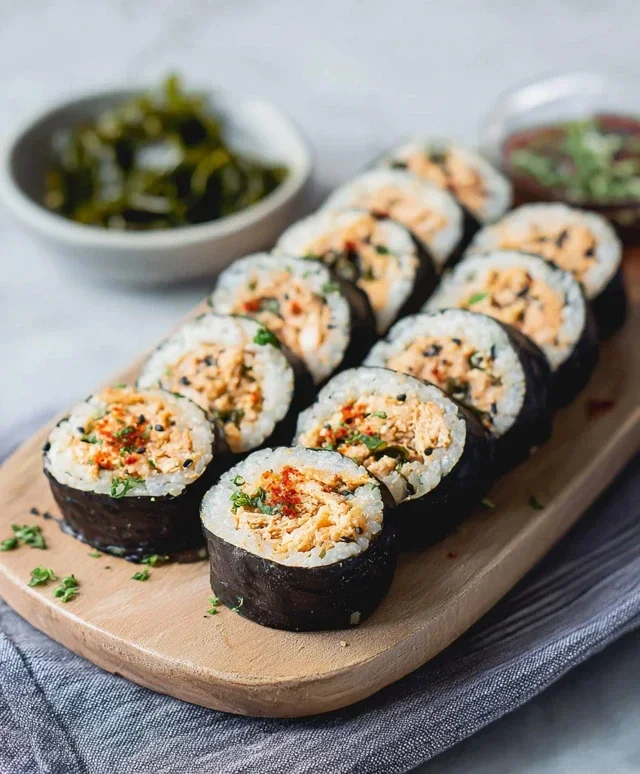
Once your kimbap rolls are assembled and senon-alcoholic aled, it’s time to slice them. Use a sharp knife for clean cuts; a slightly wet knife can also help prevent sticking. Slice each roll into 1-inch pieces. You can serve these spicy tuna kimbap immediately or pack them for on-the-go. They are delicious on their own, but also pair wonderfully with a side of pickled radish or a light soy sauce-based dipping sauce. Enjoy your incredibly easy and flavorful 15-minute spicy tuna kimbap!
Conclusion:
And there you have it! Our Easy 15-min. Spicy Tuna Kimbap is a true weeknight hero. It’s incredibly quick to assemble, packed with flavor, and surprisingly satisfying. The balance of spicy tuna, crisp vegetables, and perfectly seasoned rice wrapped in nori makes for a delightful and wholesome meal or snack. This recipe is fantastic because it proves you don’t need hours in the kitchen to enjoy delicious, homemade Korean food. I hope you’ll give this Speedy Kimbap a try – I’m confident you’ll love how easy and rewarding it is!
Serve your Spicy Tuna Kimbap on its own as a light lunch or a hearty snack. It also pairs wonderfully with a simple side of pickled radishes or a light, savory soup. For variations, feel free to swap out the spicy tuna for cooked shrimp, imitation crab, or even a vegetarian filling like seasoned tofu. You can also add other finely chopped vegetables like corn, peas, or bell peppers for extra texture and nutrients. Don’t be afraid to experiment and make it your own!
Frequently Asked Questions:
Can I make the spicy tuna mixture ahead of time?
Absolutely! You can prepare the spicy tuna mixture a day in advance and store it in an airtight container in the refrigerator. This will make assembling your Easy 15-min. Spicy Tuna Kimbap even faster when you’re ready to roll.
What if I don’t like spicy food?
No problem! You can easily adjust the spice level. Start with less gochujang or chili flakes, and you can even omit them entirely. You could opt for a mayonnaise-based tuna salad or a teriyaki-flavored tuna for a non-spicy but equally delicious kimbap.
What kind of rice is best for kimbap?
Short-grain or medium-grain sushi rice is ideal for kimbap. It has a sticky texture that holds the rolls together well and absorbs the seasoning nicely. Just be sure to rinse the rice thoroughly before cooking!
Easy 15-min. Spicy Tuna Kimbap
Quick and flavorful Korean rice rolls filled with spicy tuna and fresh vegetables. Perfect for a speedy lunch or snack.
Ingredients
-
2 sheets nori (or gim (dry roasted seaweed))
-
4 perilla leaves (washed & dried with stems trimmed (or sub with green leaf lettuce))
-
1/2 tsp sesame oil (to season kimbap)
-
1/2 tsp sesame seeds (to garnish kimbap)
-
2 cups cooked short grain rice (hot)
-
1 tsp sesame oil
-
1 tsp sesame seeds
-
1 tsp salt
-
5.3 oz canned tuna in oil (drained)
-
2 tbsp green onion (very finely chopped)
-
2 tbsp Japanese mayo (aka Kewpie mayo)
-
1-2 tbsp sriracha (depending on your spice tolerance)
Instructions
-
Step 1
In a bowl, combine the drained tuna, chopped green onion, mayonnaise, and sriracha. Mix well until thoroughly combined. Adjust sriracha to your preferred spice level. -
Step 2
In a separate bowl, gently mix the hot cooked rice with 1 tsp sesame oil, 1 tsp sesame seeds, and 1 tsp salt. Be careful not to mash the rice. -
Step 3
Lay one sheet of nori, shiny side down, on a bamboo rolling mat or a clean surface. If using a mat, cover it with plastic wrap. -
Step 4
Spread half of the seasoned rice evenly over the nori, leaving about a 1-inch border at the top. Place two perilla leaves on top of the rice, overlapping slightly. -
Step 5
Spoon half of the spicy tuna mixture horizontally across the perilla leaves, closer to the bottom edge of the rice. -
Step 6
Carefully lift the edge of the nori closest to you and begin rolling, tucking the filling in as you go. Use the bamboo mat to help shape and tighten the roll. -
Step 7
Repeat the process with the remaining ingredients to make the second roll. Brush the finished rolls lightly with 1/2 tsp sesame oil and sprinkle with 1/2 tsp sesame seeds. -
Step 8
Slice each roll into 6-8 pieces using a sharp knife. Serve immediately.
Important Information
Nutrition Facts (Per Serving)
It is important to consider this information as approximate and not to use it as definitive health advice.
Allergy Information
Please check ingredients for potential allergens and consult a health professional if in doubt.