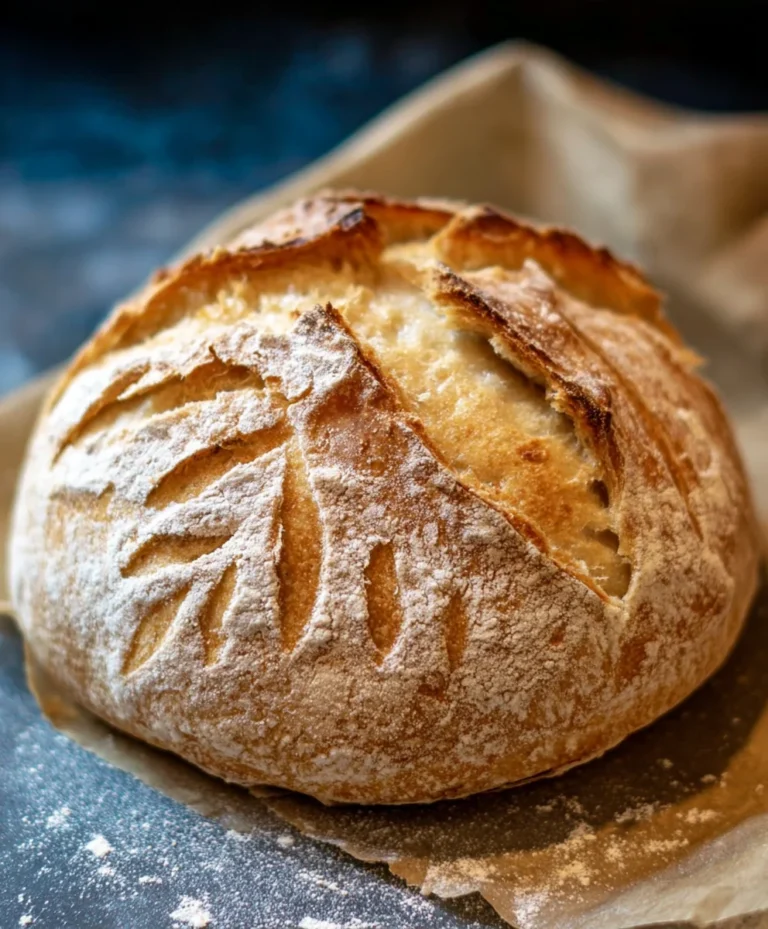
Cheesy Sourdough Bread Recipe – Easy Delicious Loaf
Sourdough Cheese Bread is more than just a simple loaf; it’s a culinary experience that warms the soul and tantalizes the taste buds. There’s something undeniably magical about the tangy depth of sourdough, perfectly complemented by the irresistible, gooey pockets of melted cheese. This isn’t your everyday sandwich bread; it’s a celebration of flavor and texture, a testament to the slow, patient art of fermentation. People adore this bread because it delivers on so many levels: its crust is wonderfully crisp, yielding to a soft, airy interior speckled with savory cheese. It transforms a humble meal into something extraordinary, whether served alongside a hearty soup, toasted with butter, or enjoyed all on its own. What truly sets our Sourdough Cheese Bread apart is the harmonious marriage of the characteristic sourdough tang with the rich, indulgent notes of aged cheddar and the subtle sweetness of Gruyère, creating a complex yet comforting flavor profile that will have everyone reaching for another slice.

Ingredients:
- 1 cup milk (244 g) – Room temperature milk will incorporate more smoothly into the dough.
- 1/2 cup active sourdough starter (113 g) – Ensure your starter is bubbly and has been fed recently for the best rise.
- 1 large egg – For richness and binding in the dough.
- 1 tablespoon sugar (12 g) – Feeds the yeast in the sourdough and adds a hint of sweetness.
- 1 teaspoon salt (5 g) – Essential for flavor and controlling yeast activity.
- 1 teaspoon garlic powder (3 g) – To infuse that delicious savory aroma and taste.
- 3 cups flour (420 g) – All-purpose flour works wonderfully here.
- 4 tablespoons butter (56 g) – Softened butter will make the dough wonderfully supple.
- 2 cups shredded cheddar cheese – A good quality cheddar will melt beautifully.
- Optional: 1 egg yolk mixed with a splash of water for an egg wash, and a pinch of flaky sea salt for topping.
Preparing the Dough Base
Mixing the Wet Ingredients
- In a large mixing bowl, combine the room temperature milk, active sourdough starter, and the large egg. Whisk these together gently until they are well incorporated. This creates the liquid base for our dough. The sourdough starter will begin extract to work its magic, providing that signature tang and leavening.
- Next, add the tablespoon of sugar and the teaspoon of salt to the wet ingredients. Stir again to ensure the sugar and salt are dissolved and evenly distributed. The sugar not only adds a touch of sweetness but also acts as food for the wild yeast present in the sourdough, promoting a better rise. The salt is crucial for flavor development and also helps to control the fermentation process, ensuring a consistent bake.
Incorporating Dry Ingredients and Butter
- To the wet mixture, add the teaspoon of garlic powder and then gradually incorporate the 3 cups of flour. You can add the flour in two or three additions, mixing with a wooden spoon or a spatula after each addition. This helps to prevent a cloud of flour from erupting and ensures everything is combined without overworking the dough at this stage. Once most of the flour is incorporated and a shaggy dough forms, it’s time to add the butter.
- Add the softened butter to the dough.gin extractw, begin to knead the dough. You can do this by hand on a lightly floured surface or in a stand mixer fitted with a dough hook. Knead for about 8-10 minutes by hand, or 5-7 minutes in a stand mixer on medium speed. The dough should become smooth, elastic, and slightly sticky. The butter will soften as you knead, and the dough will transform from a rough mass into a pliable, silken ball. Resist the urge to add too much extra flour; a slightly sticky dough is often desirable for a soft crum extractb.
First Rise and Cheese Incorporation
- Shape the kneaded dough into a smooth ball and place it in a lightly greased bowl. Cover the bowl tightly with plastic wrap or a damp kitchen towel. Let the dough rise in a warm place for 6-12 hours, or until it has at least doubled in size. The exact time will depend on the ambient temperature and the activity of your sourdough starter. This long, slow fermentation develops a complex flavor profile characteristic of sourdough.
- Once the dough has doubled, gently punch it down to release some of the air. Turn the dough out onto a lightly floured surface. Now, it’s time to add the star of the show: the shredded cheddar cheese. Scatter the 2 cups of shredded cheddar cheese evenly over the surface of the deflated dough.
- Gently knead the cheese into the dough. This can be a little tricky as the cheese might want to escape. Fold the dough over itself a few times and press down to incorporate the cheese. Continue this gentle kneading motion until the cheese is relatively evenly distributed throughout the dough. You don’t need to knead it for as long as you did initially; the goal is just to get the cheese integrated without tearing the dough too much. A few small pockets of cheese are perfectly fine and will lead to delicious cheesy pockets in the final bread.
Second Rise and Baking
- Shape the cheese-infused dough into your desired loaf shape – a round boule or an oblong loaf works well. Place the shaped dough onto a baking sheet lined with parchment paper, or into a greased loaf pan. Cover the loaf loosely with plastic wrap or a damp towel and let it rise again in a warm place for another 2-4 hours, or until it has nearly doubled in size. This second rise is crucial for the final texture and volume of your Sourdough Cheese Bread.
- Preheat your oven to 375°F (190°C). If you are using an egg wash, gently brush the top of the risen loaf with the mixture of egg yolk and water. This will give your bread a beautiful golden-brown crust. If desired, sprinkle a bit of flaky sea salt over the egg wash for an extra burst of flavor and texture.
- Carefully place the baking sheet or loaf pan into the preheated oven. Bake for 30-40 minutes, or until the crust is a deep golden brown and the internal temperature of the bread reaches at least 200°F (93°C) when tested with an instant-read thermometer. If the crust is browning too quickly, you can loosely tent the loaf with aluminum foil.
- Once baked, remove the Sourdough Cheese Bread from the oven and transfer it to a wire rack to cool completely. Allowing the bread to cool is essential frum extractthe crumb to set properly. Slicing into hot bread can result in a gummy texture. Enjoy the incredible aroma as it cools – the melted cheese and garlic will fill your kitchen!

Conclusion:
We’ve reached the end of our journey creating the most delicious Sourdough Cheese Bread! I hope you’ve enjoyed learning how to bake this wonderfully flavorful and aromatic loaf. This recipe has truly transformed simple ingredients into something extraordinary, showcasing the tangy depth of sourdough combined with the irresistible allure of melted cheese. Whether you’re a seasoned baker or just starting out, don’t be intimidated. The process is rewarding, and the result is well worth the effort. Imagin extracte serving a warm slice of this golden-brown masterpiece at your next gathering or simply enjoying it as a comforting treat with your favorite soup.
For serving suggestions, this Sourdough Cheese Bread is fantastic on its own, toasted, or used as the base for a gourmet grilled cheese sandwich. It pairs beautifully with a hearty stew, a fresh salad, or even as a side for pasta dishes. Don’t hesitate to experiment with different cheese combinations – a sharp cheddar, smoky Gruyère, or even a spicy pepper jack can elevate this bread to new heights. Feel free to add herbs like rosemary or chives into the dough for an extra layer of flavor. The possibilities are truly endless with this versatile recipe!
Frequently Asked Questions about Sourdough Cheese Bread:
Q1: Can I make Sourdough Cheese Bread without a starter?
While this recipe specifically calls for an active sourdough starter to achieve that characteristic tangy flavor and airy crum extractb, you can adapt it using commercial yeast if you don’t have a starter. You would typically substitute the starter with a combination of yeast and a bit of flour and water to create a pre-ferment, but the taste and texture will differ from traditional sourdough.
Q2: What are the best cheeses to use in Sourdough Cheese Bread?
For this Sourdough Cheese Bread, a good melting cheese is key. Sharp cheddar, Monterey Jack, Gruyère, Gouda, and even a blend of mozzarella and Parmesan work exceptionally well. Consider using a mix of cheeses for a more complex flavor profile. For a touch of heat, try adding some shredded pepper jack.
Cheesy Sourdough Bread Recipe – Easy Delicious Loaf
An easy and delicious recipe for homemade sourdough bread infused with cheddar cheese and garlic.
Ingredients
-
1 cup milk
-
1/2 cup active sourdough starter
-
1 large egg
-
1 tablespoon sugar
-
1 teaspoon salt
-
1 teaspoon garlic powder
-
3 cups flour
-
4 tablespoons butter
-
2 cups shredded cheddar cheese
-
Optional: egg yolk for egg wash, flaky sea salt for topping
Instructions
-
Step 1
In a large mixing bowl, combine the room temperature milk, active sourdough starter, and the large egg. Whisk these together gently until they are well incorporated. This creates the liquid base for our dough. The sourdough starter will begin to work its magic, providing that signature tang and leavening. -
Step 2
Next, add the tablespoon of sugar and the teaspoon of salt to the wet ingredients. Stir again to ensure the sugar and salt are dissolved and evenly distributed. The sugar not only adds a touch of sweetness but also acts as food for the wild yeast present in the sourdough, promoting a better rise. The salt is crucial for flavor development and also helps to control the fermentation process, ensuring a consistent bake. -
Step 3
To the wet mixture, add the teaspoon of garlic powder and then gradually incorporate the 3 cups of flour. You can add the flour in two or three additions, mixing with a wooden spoon or a spatula after each addition. Once most of the flour is incorporated and a shaggy dough forms, add the softened butter. Begin to knead the dough by hand or in a stand mixer for about 8-10 minutes by hand, or 5-7 minutes in a stand mixer, until it becomes smooth, elastic, and slightly sticky. -
Step 4
Shape the kneaded dough into a smooth ball and place it in a lightly greased bowl. Cover the bowl tightly and let the dough rise in a warm place for 6-12 hours, or until it has at least doubled in size. Once doubled, gently punch it down and spread it out onto a lightly floured surface. Scatter the 2 cups of shredded cheddar cheese evenly over the surface of the dough. Gently knead the cheese into the dough until relatively evenly distributed. -
Step 5
Shape the cheese-infused dough into your desired loaf shape and place it onto a baking sheet lined with parchment paper or into a greased loaf pan. Cover loosely and let it rise again in a warm place for another 2-4 hours, or until it has nearly doubled in size. Preheat your oven to 375°F (190°C). -
Step 6
If using an egg wash, gently brush the top of the risen loaf. If desired, sprinkle with flaky sea salt. Carefully place the baking sheet or loaf pan into the preheated oven and bake for 30-40 minutes, or until the crust is a deep golden brown and the internal temperature reaches at least 200°F (93°C). If the crust browns too quickly, tent loosely with aluminum foil. -
Step 7
Once baked, remove the bread from the oven and transfer it to a wire rack to cool completely before slicing to allow the crumb to set properly.
Important Information
Nutrition Facts (Per Serving)
It is important to consider this information as approximate and not to use it as definitive health advice.
Allergy Information
Please check ingredients for potential allergens and consult a health professional if in doubt.